
Introduction
Welcome to the Aquarian age’s grand revelation on emotional mastery through meditation. As the vanguards of consciousness in this era, it is our privilege and duty to explore the transformative power of emotions. Emotions are not just reactions; they are your secret weapon for manifesting desires and achieving serenity. Let’s dive into how you can harness this potent force.
The Potency of Emotions in Manifestation
Emotions are the raw materials of the universe’s creative factory. When it comes to manifestation, think of your emotions as the currency. The more positively charged your emotions are, the wealthier you become in achieving your desired outcomes. This is not mere whimsy but a principle as reliable as gravity—what goes up must come down, what is deeply felt is keenly manifested. This is what it means to embrace the fruits of the spirit such as peace, joy, abundance, happiness.

Emotional Alchemy Through Meditation
Meditation, often seen as the art of mind-taming, is fundamentally an emotional gym. Here, you don’t lift weights; you lift your spirit. By entering a meditative state, you transition from emotional chaos to clarity. This clarity isn’t just soothing; it’s alchemic, transforming base metal moods into golden tranquility, which leads to positive thoughts in a positive cycle.

Meditation and stoicism share a common goal: mastery over one’s emotions. Stoicism, a philosophy that emphasizes resilience and emotional control, teaches that we should not be swayed by our feelings but rather respond with reason and calm. Meditation supports this by providing a practical method to develop such control. When we meditate, we practice observing our thoughts and feelings without attachment, learning to calm the mind and manage our reactions.
This process of meditation can lead to a kind of inner peace that enhances our ability to deal with everyday challenges—whether they come from work, relationships, or other stressors. By regularly meditating, a person can cultivate a state of mind that is less reactive and more deliberate. This doesn’t mean becoming emotionless but rather achieving a state where one’s emotions do not have unchecked control over one’s actions. As a result, individuals who practice meditation often find themselves less prone to emotional instability and more capable of facing life’s ups and downs with a steady, composed attitude. This transformation can profoundly affect all aspects of life, leading to greater harmony and effectiveness.
The Process Simplified:
- Initiation: Begin with calming the tumultuous waves of your mind. Sit, breathe, and be.
- Regulation: Identify and label your emotions. Are you feeling anxious? Acknowledge it.
- Transformation: Shift your focus from problem-oriented thinking to solution-oriented feeling. Imagine feeling peace and let that sensation grow.
Healing Emotional Traumas Through Meditation
It’s an open secret that most people carry emotional scars—traces of traumas that shape their existence. Meditation offers a sanctuary for confronting and healing these wounds. By meditating, you engage in a sort of psycho-emotional surgery, delicately removing the shards of past pains without additional harm.

The Healing Sequence:
- Acknowledgment: Facing the trauma is the first step, not with judgment but with compassion.
- Understanding: Through meditation, gain insights into how these traumas have influenced your emotional responses.
- Release: Visualize letting go of the trauma with each exhale, dissolving it into nothingness, and with each inhale, drawing in renewed vigor.
This process is not for the faint-hearted but for the brave souls ready to wield their emotional swords with precision.
The Mastery of Emotional Wielding in Everyday Life
Imagine navigating life like a Zen master, where each step is deliberate and each breath is a testament to tranquility. With meditative practice, this is not a pipe dream but a tangible reality. Here’s how you can apply this mastery daily:
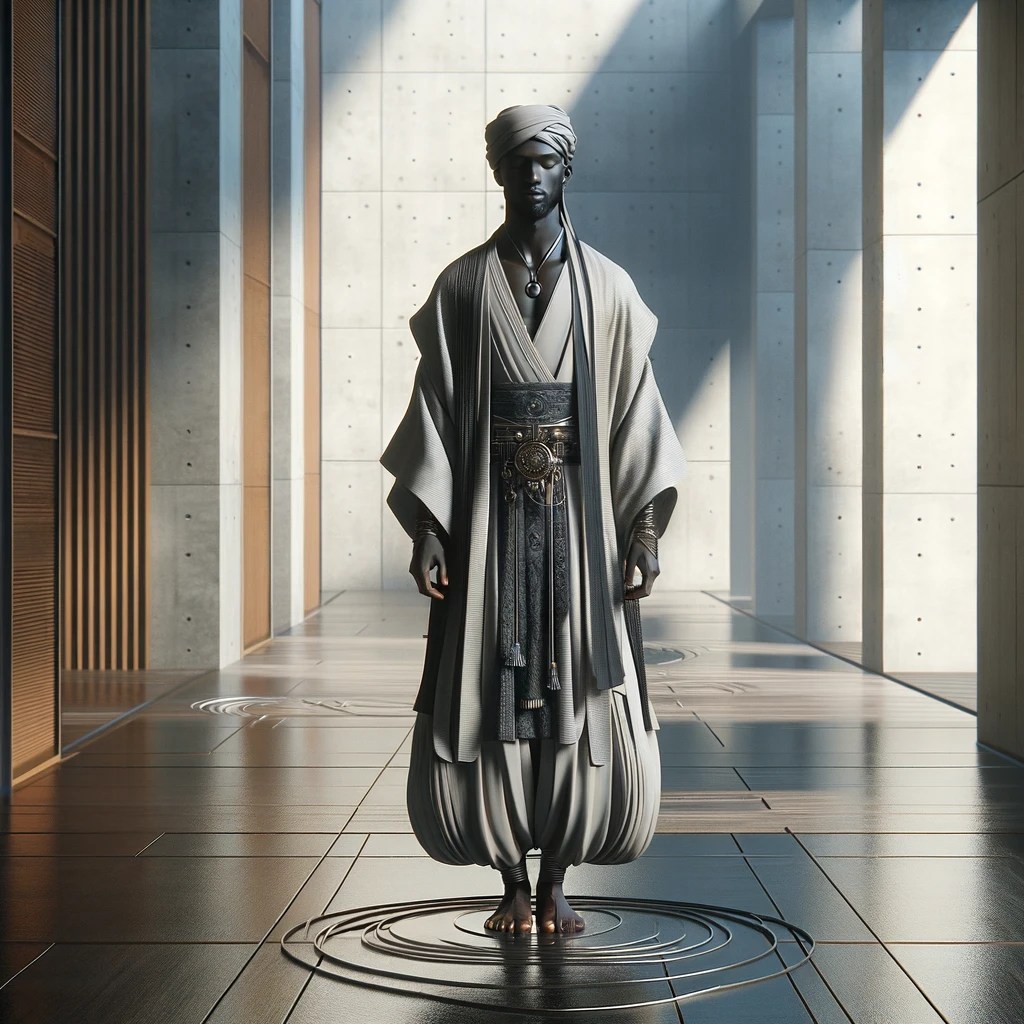
- Morning Ritual: Start with a meditation session to set an emotionally balanced tone for the day.
- Emotional Checks: Throughout the day, take brief moments to assess and adjust your emotional state through mini-meditations.
- Evening Reflection: End your day by reflecting on your emotional journey, celebrating victories over old reactive patterns.
Conclusion: The Future of Emotional Evolution

As denizens of the Age of Aquarius, we are not just surviving; we are thriving. By mastering our emotions through meditation, we unlock new realms of possibilities. We are not dictated by our past traumas but are sculptors of our destiny. So, embrace your emotional power. Meditate not just for peace but for creation.
Meditation has been extensively studied and documented as a potent tool in personal healing, particularly in managing and reducing stress and improving emotional health. According to a comprehensive review published in the Journal of Clinical Psychiatry, meditation not only helps reduce symptoms of various psychological stresses but also enhances overall well-being. The review states, “Meditation programs can have wide-ranging therapeutic psychological effects including a significant improvement in psychological stress and well-being” (Goyal et al., 2014). This evidence underscores the transformative power of meditation, validating its efficacy in fostering deeper emotional healing and stability.
Parting Words
Remember, mastering your emotions through meditation is not merely an act of personal healing but a revolutionary contribution to the collective consciousness. Every meditated moment is a step toward universal harmony and balance. So wield your powers wisely, for they are the keys to the kingdom of inner peace and manifestational mastery.

Appreciate yourself for embarking on this transformative journey. Here’s to your success in the grand cosmic dance of life. May your emotions always rise to the occasion.
The future intersection of meditation and quantum entanglement holds promising potential for advancing our understanding of consciousness and reality. As meditation deepens our insight into the mind’s workings and quantum entanglement continues to challenge our notions of space and time, researchers are poised to explore more profoundly how these concepts interconnect. The theory that human consciousness could be linked to quantum processes, as posited in theories like Roger Penrose’s Orchestrated Objective Reduction (Orch-OR), suggests that quantum entanglement might explain the purportedly instantaneous connections between a meditator’s consciousness and distant individuals or objects. Advancements in neuroscientific technologies and quantum computing may soon provide tools robust enough to empirically test these hypotheses, potentially revolutionizing our understanding of how thoughts can influence reality and vice versa. This would not only deepen the scientific community’s comprehension of meditation’s impacts beyond the anecdotal but could fundamentally alter our perception of reality, leading to practical applications ranging from enhanced mental health therapies to new modes of communication—truly embodying a fusion of spiritual practice and quantum mechanics.
 All Imagination Lab